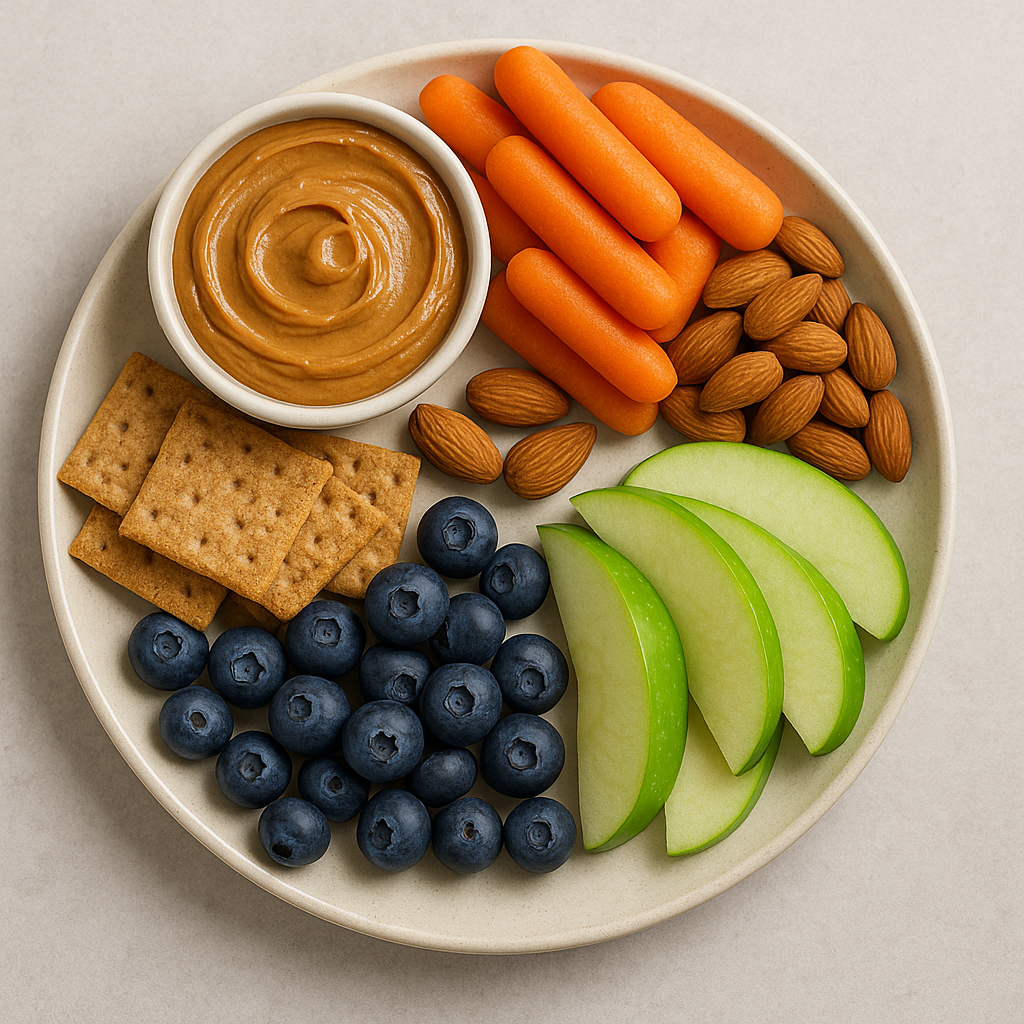
The most useful snack is one that suits your day, your tastes and the rest of your meals. You do not need a cupboard full of specialist products to have a few good options ready. Most snack foods work best when they combine a protein food with fibre or volume, and when they are planned for a gap you can actually predict rather than eaten out of habit.
Start with the gap you need to fill
Think about when you normally need a snack. Is it the long stretch between lunch and dinner, an early start or a journey home? Planning for that moment is more practical than buying food you never get around to eating.
It also helps to be honest about whether a snack is answering hunger or just filling a pause. A useful snack tends to follow a predictable gap in the day. A snack that appears most evenings in front of the television, or whenever the kitchen is quiet, is often closer to a habit. Neither is a moral failing, but only one of them needs a shopping list.
When a snack tends to be useful
- Long gaps between meals: if lunch and dinner are many hours apart, a planned snack can make the wait comfortable instead of something you endure.
- Early starts and late finishes: a shift that begins before breakfast or ends after dinner often leaves an awkward gap.
- Shift work: when your working hours move around, meals move around with them, and a snack can hold a sensible shape to the day.
- Around training: on days when you are more active, or training soon after work, you may simply be ready for something before your next meal.
- Travel and unpredictability: a journey, a meeting that overruns or a delay is easier to handle when you already have something with you.
If you find you are often hungry soon after eating a full meal, that is worth looking at as a meals question rather than a snacks question. Our guide to building filling meals that last covers the meal side in more detail.
Simple snack ideas to keep ready
- Fruit and yoghurt: use fruit you enjoy and check the yoghurt label against your dietary needs.
- Vegetable sticks and hummus: keep the dip separate until you are ready to eat.
- Toast with a topping: choose an option you enjoy, such as nut butter, egg or hummus, and consider the portion.
- A small portion of nuts: check the ingredients and portion the amount you want rather than eating straight from a large bag.
- A little of a prepared meal: a snack does not have to come from a snack aisle. Choose food that has been stored safely.
These are ideas, not a fixed daily menu. Ingredients, portions and individual needs vary.
What makes a snack more filling
There is no single filling food, but a helpful pattern is a protein food plus something with fibre or volume. That combination tends to feel more like a small meal and less like something you eat and forget about.
- Greek-style yoghurt with fruit: the yoghurt adds the protein element, the fruit adds fibre and bulk.
- Boiled eggs: make a few in advance, cool them quickly and keep them chilled.
- Hummus with vegetable sticks: quick to portion, and the vegetables give the snack some volume.
- A small handful of unsalted nuts: easy to carry, though worth portioning rather than grazing from the bag.
- Roasted chickpeas: a useful change from nuts, and they keep reasonably well in a sealed container.
- Oatcakes with a topping: a plain base that works with hummus, cheese or a little mashed avocado.
- Fruit on its own: the simplest option, and often enough alongside a protein food from earlier in the day.
Use these as combinations to try rather than portions to measure out. How much suits you depends on your appetite, your size, your activity and what you ate earlier. We have deliberately not put numbers on them, because a figure copied from a label or a website is not a personalised portion. If you want help judging amounts, a registered dietitian can look at your actual week.
Check the label, not just the front of the pack
Compare the portion size on the label with the amount you plan to eat. Include toppings and drinks when thinking about the overall snack. Descriptions such as “natural” or “high protein” do not explain everything about a product.
Front-of-pack nutrition labels in the UK use traffic-light colours for fat, saturates, sugars and salt, with red, amber and green indicating whether a product contains a lot, a medium amount or a little of each. It is a quick comparison tool rather than a verdict: a product can be red on one nutrient and green on another, and the colours say nothing about whether the food fits your own needs. Comparing two similar products side by side is often where the label earns its keep.
The ingredients list is worth reading too. Ingredients are listed in descending order by weight, so the first few tell you a lot about what the product mainly is. For a snack with several components, such as a pot with a dip and a topping, check whether the label describes the whole pot or one part of it.
The traffic-light system comes from the Food Standards Agency and is used widely by UK retailers, and the NHS offers general healthy eating guidance that puts single products into context.
Prepare enough for the days you need it
Wash or portion ingredients when practical, then follow their storage instructions. If you are taking food to work, consider the journey and the fridge space available there.
For storage guidance, see the Food Standards Agency’s chilling and freezing information.
Building snack boxes for the week
A snack box is simply a portioned container you put together once and use over several days. It saves you making decisions when you are tired, which is usually when the least useful options win.
- Decide how many snack moments you actually have. Three or four a week is a realistic start for most people.
- Choose two or three combinations from the list above rather than one for every day.
- Prep the components, not the finished box. Boil eggs, cut vegetables, portion nuts or oatcakes, and keep dips and wet components separate so nothing goes soft.
- Use containers you can see into and label anything you might not recognise later in the week.
- Keep chilled items cold on the journey, and put them in a fridge as soon as you arrive.
Storage time matters more than storage technique. Most prepped components last better than you might expect if they are kept cold and covered, but not indefinitely, and anything that looks, smells or feels wrong should go. Our guide to storing and reheating meal prep safely covers fridge and freezer timings, and meal prep for beginners is a sensible place to start if a whole week of prepping feels like a lot.
Training-day snacks
On training days, appetite and timing often shift. If you train after work, the gap between lunch and the session can be long; if you train in the morning, breakfast may need to happen earlier or in two parts. A snack before training is usually about arriving comfortable rather than full, and one afterwards is often simply the next meal by another name.
What suits you will depend on the session, the time of day and how you feel eating beforehand. Our guide to meal prep for training days covers the wider day, and protein-rich meal prep ideas is a useful companion if you want to build meals rather than rely on snacks.
Keep snacks in the context of your meals
For weight management, look at your overall choices and portions rather than expecting a particular snack to burn fat or prevent cravings. The NHS Better Health guidance offers a practical starting point.
No single food causes or prevents weight change on its own, and a snack is rarely the reason a week goes well or badly. What tends to matter is the overall pattern: how your meals are built, whether you are eating enough at mealtimes to reach the next one comfortably, and whether the food you keep to hand is food you actually want to eat.
If you are planning a broader change, our meal prep for fat loss guide looks at portions without the extreme claims, and our services page explains what we currently offer and what is still to come. To make the week easier, start with our meal prep for beginners guide.
This page is general information, not medical or dietetic advice. If you have a health condition, take medication, or your appetite, weight or eating has changed in a way that concerns you, speak to your GP or a registered dietitian about what suits you.
Frequently asked questions
Is it bad to snack between meals?
No. Snacking is neither good nor bad in itself. What matters is why you are eating, whether the snack fits the rest of your day, and whether it leaves you comfortable until your next meal rather than hungrier shortly afterwards.
What should a filling snack contain?
A protein food plus something with fibre or volume is a practical pattern: Greek-style yoghurt with fruit, hummus with vegetable sticks, oatcakes with a topping, boiled eggs or roasted chickpeas. That gives a snack more substance than a single dry or sweet item, without needing to count anything.
Do I need to weigh or count my snacks?
Not necessarily. Portioning nuts into a small container and keeping dip separate are practical habits, but measuring everything is not required for most people and can make food feel like a task. If you have a reason to track amounts, a registered dietitian can advise on the approach that suits you.
Are “high protein” or “natural” snacks worth buying?
Sometimes, but the words alone do not tell you much. Read the traffic-light label and the ingredients list, and compare the portion stated on the pack with what you would actually eat. A product marketed on one claim can still carry a lot of salt or sugar.
How long can I keep prepped snacks in the fridge?
It depends on the food. Cooked and chilled components generally keep for a shorter time than uncut vegetables, and anything that looks or smells wrong should be thrown away. Our storage and reheating guide goes through the timings in more detail.
General food ideas, not a personalised diet. Sources checked: NHS Better Health, Food Standards Agency and GOV.UK, October 2026.
Last reviewed: October 2026