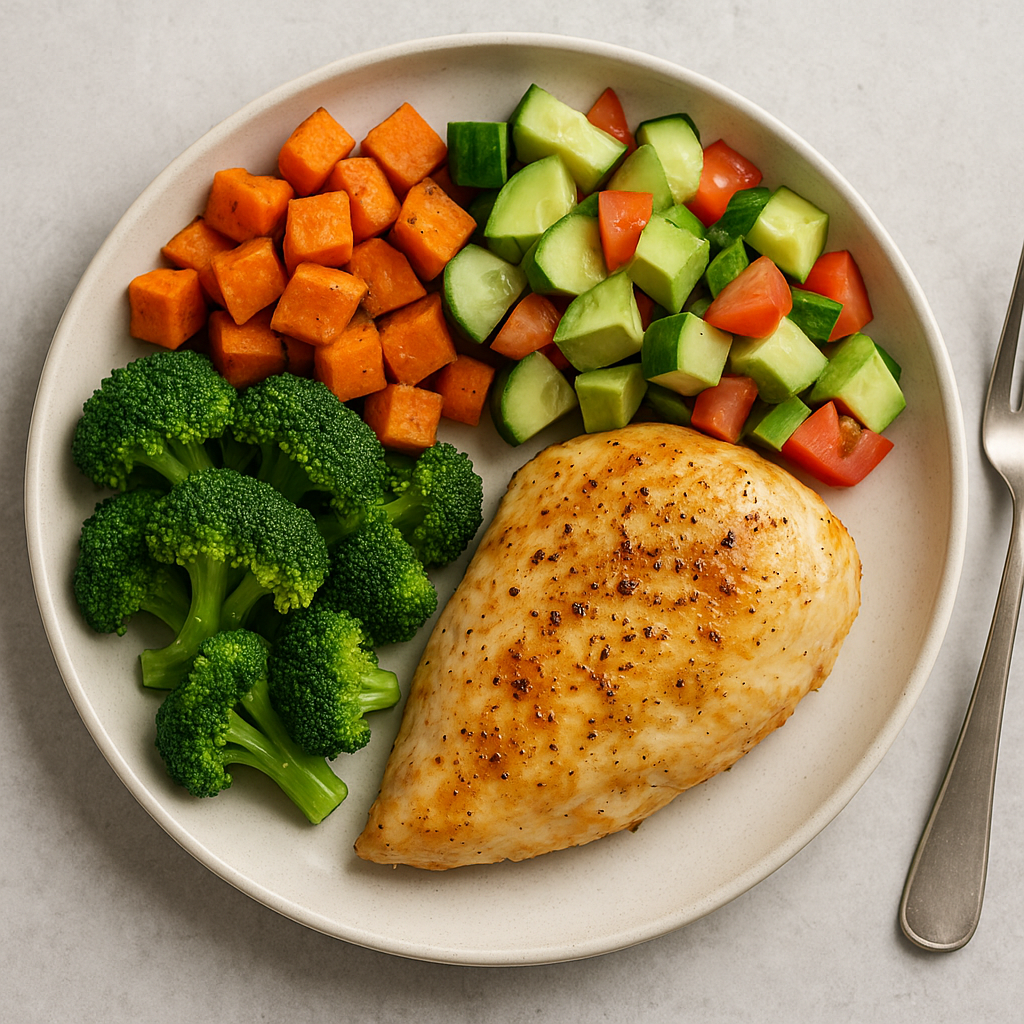
A useful weight-loss meal plan starts with food you enjoy and portions that fit your needs. There is no special ingredient that makes the rest of your eating habits irrelevant. Think about the whole meal and the routine around it.
Choose foods you can use in real meals
Instead of buying a list of supposed superfoods, choose ingredients you know how to prepare. The NHS focuses on healthier choices and portion sizes in its weight management guidance. Use that as a starting point rather than expecting one food to produce a particular result.
Vegetables and fruit you actually like
Fresh, frozen and suitable tinned options can make meal planning easier. Keep ingredients for a quick side, a lunch bowl or a snack available. Choose varieties you will use rather than filling the fridge with good intentions.
Beans, lentils, eggs, fish and other protein choices
Choose options that fit your preferences and budget. A tin of beans can become a salad, a chilli or a soup. Eggs can work at breakfast or lunch. Check ingredients and cooking instructions when using prepared products.
Oats, potatoes, rice, pasta and bread
These are everyday ingredients you can build meals around. Consider the portion, the preparation method and what you serve alongside them. You do not need to treat an entire food group as off limits because a social post says so.
Turn ingredients into a manageable plan
Pick two or three meals before shopping. For example, you could plan a bean chilli, a vegetable and egg lunch, and a fish or tofu dinner. Use a recipe you trust and choose quantities for your household.
Check the cupboards first, then write one shopping list. Reusing ingredients across meals can reduce the number of things you need to buy and prepare. Our meal prep starting guide helps you keep the routine small enough to repeat.
Look at portions, sauces and drinks too
A meal is more than its headline ingredient. Include dressings, sauces, extras and drinks when thinking about what you eat. If you want structured support with weight management, the NHS guidance gives a more useful starting point than a ranked list of miracle foods.
What about snacks?
Plan snacks around when you need them rather than treating them as a failure. Read our practical snack ideas for food you can keep ready.
Find a routine that fits
Start with the part of the day that is hardest to manage. Preparing a work lunch may help more than changing every dinner. If you have a medical condition or an individual dietary plan, use the advice you have received from your healthcare team.
General food information. Source checked: NHS Better Health, 4 October 2026. This guide does not promise weight-loss results or provide a personalised diet.