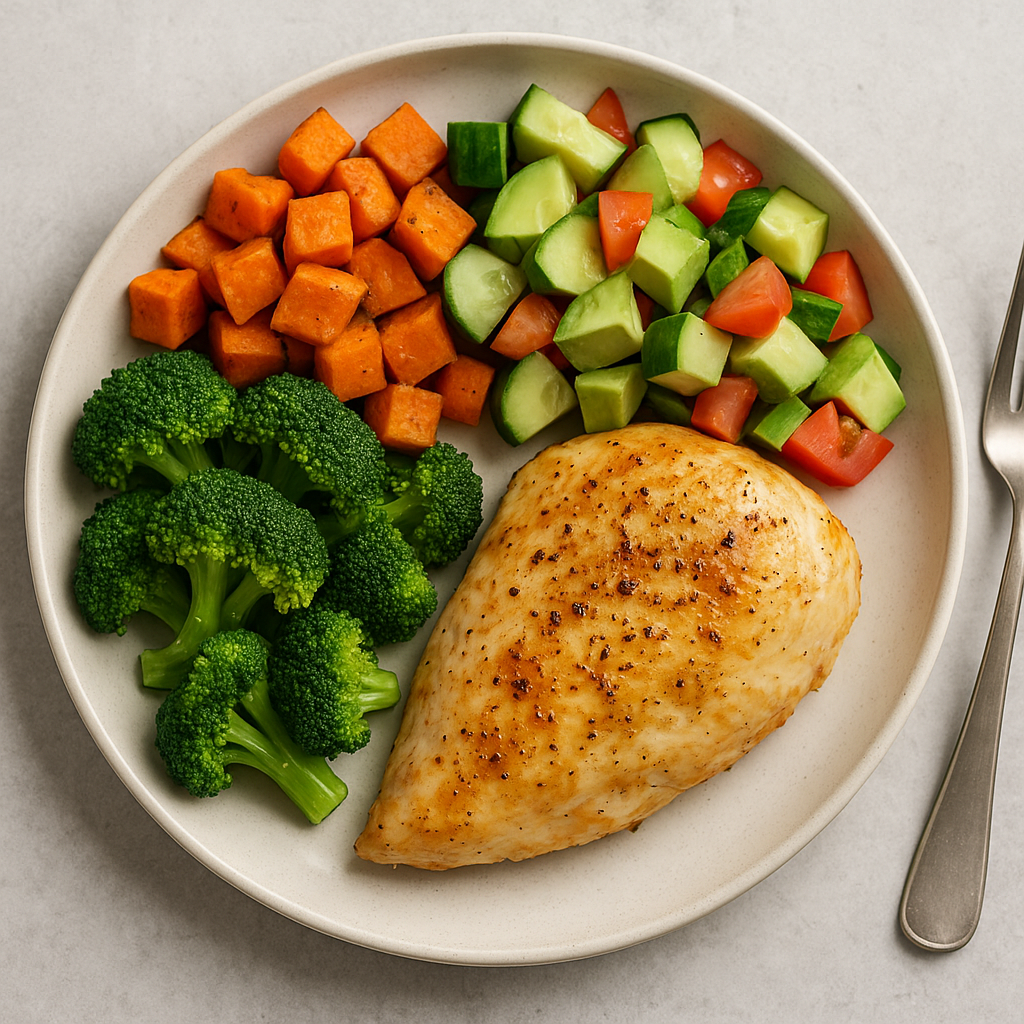
Filling meals are built from more than one ingredient. A meal that combines a protein food, fibre-rich vegetables or pulses, and a sensible portion of wholegrain carbohydrate tends to satisfy for longer than a plate of one component. This guide covers what to put on the plate, how to put it together at home, and how to batch-cook and portion those meals for the working week.
What makes a meal filling
There is no single food that causes weight loss, and no ingredient makes the rest of your eating habits irrelevant. The useful question is what keeps a meal satisfying while fitting your overall pattern of eating, as set out in NHS Better Health guidance and the NHS Eatwell Guide.
Protein foods
Fish, eggs, lean meat, tofu, beans, lentils and plain yoghurt are the foods most often used to make a meal feel substantial. They are usually the anchor of a main meal, and keeping one in each meal you cook saves you improvising.
Fibre-rich vegetables, pulses and wholegrains
Vegetables, fruit, beans, lentils and wholegrain versions of bread, rice and pasta are the practical route to more fibre. Food labels often show fibre alongside energy and other nutrients if you want to compare products.
Volume from vegetables
Vegetables add bulk and texture, which is a big part of what makes a plate feel like a proper meal. Roasted, steamed, raw, frozen and tinned all count towards your plate, so use whichever you will actually get through the week.
Water-rich foods
Soups, stews, curries, salads and fruit contain a lot of water, which contributes to the volume of a meal. They also reheat and portion well, which matters if you are preparing food in advance.
Building a plate: what the Eatwell Guide describes
The NHS Eatwell Guide sets out the proportions of different food groups that make up a balanced diet, rather than being a meal template. In broad terms, it gives the largest share of the plate to vegetables and fruit, a substantial share to starchy carbohydrates where you choose wholegrain or higher-fibre versions, and smaller shares to protein foods, dairy or dairy alternatives, and fats and spreads. It also places foods high in fat, salt or sugar in a separate, smaller category as occasional choices.
Treat those proportions as a pattern across your day’s meals rather than a ruler to measure dinner by. The Eatwell Guide is a practical everyday eating pattern, not a meal plan for a particular person’s medical needs.
Food groups and example foods
Having two or three options at hand in each group makes meal planning easier and keeps shopping repetitive in a helpful way.
| Food group | Example foods | Useful in meals as |
|---|---|---|
| Protein foods | Lean meat, fish, eggs, tofu, beans and lentils | The main component of a hot meal, a salad or a soup |
| Dairy or dairy alternatives | Plain Greek-style yoghurt, milk or an unsweetened alternative | Breakfast, dressings and cooling a spicy dish |
| Starchy carbohydrates | Oats, wholegrain rice and pasta, wholemeal bread, potatoes with the skins on | The base of a bowl, container or tray of roasted vegetables |
| Vegetables and fruit | Any fresh, frozen, tinned or dried options you enjoy | At least half of the plate where you can manage it |
| Fats, oils and spreads | A small amount of oil, butter or a spread | Cooking and dressing, used in smaller amounts |
Check the label on prepared products rather than relying on the front of the pack, and check ingredients against your own dietary needs. For example, if you eat halal, use halal meat, fish, pulses, eggs and vegetables in exactly the same way — the way you build the plate does not change.
How to meal-prep these meals for the week
This is the part that makes a filling plate realistic on a busy Wednesday. You are preparing components and then combining them, rather than cooking seven different complete meals.
- Batch-cook one protein. A tray of chicken pieces, a chilli made with beans or lentils, a fish dish you plan to freeze, or a pan of boiled eggs gives you a repeatable component.
- Cook one grain or starchy base. A pan of wholegrain rice or pasta, a batch of potatoes boiled or roasted in their skins, or overnight oats covers several meals.
- Roast a tray of vegetables. Mixed vegetables roasted in a little oil keep well and can go into a bowl, a wrap or alongside an egg.
- Mix and match. Combine protein, base and vegetables in different combinations through the week so the routine does not become boring. Our protein-rich meal prep ideas show how the parts fit together.
- Portion into containers. Decide the portion before the container, then label and cool it properly. Our guide to storing and reheating meal prep safely covers cooling, fridge and freezing basics.
If you are starting out, meal prep for beginners keeps the first week small, and cheap meal prep covers keeping the shopping list affordable. Our meal prep for fat loss guide looks at portions without the extreme claims, and our services overview explains the planning guides we provide.
| Prepped component | Meal it can become |
|---|---|
| Batch-cooked chicken or tofu | Grain bowl with roasted vegetables; wrap with salad |
| Bean or lentil chilli | Chilli with wholegrain rice; soup topped with yoghurt |
| Roasted vegetable tray | Side with a fish or egg meal; part of a lunch container |
| Cooked wholegrain rice or pasta | Base for a bowl; cold salad with beans and vegetables |
| Overnight oats with plain yoghurt and fruit | Breakfast that travels to work |
High-fibre foods to build meals around
NHS guidance says adults should aim for 30g of fibre a day, and most people in the UK eat less than that. You don’t need to count grams to move in the right direction. Choosing higher-fibre versions of the foods you already eat does most of the work:
- Breakfast: porridge oats, wholegrain breakfast cereals without added sugar, and wholemeal toast.
- Starchy bases: wholewheat pasta, brown rice, bulgur wheat and potatoes eaten with their skins.
- Pulses: beans, lentils and chickpeas, fresh, dried or tinned in water. They work in chillies, curries, soups and salads, and stretch a meat dish further.
- Vegetables and fruit: fresh, frozen and tinned all count. Leaving the skin on where it’s edible helps.
- Nuts and seeds: a small handful as a topping for yoghurt, porridge or salads.
Increase fibre gradually and drink plenty of fluids, as a sudden big increase can cause bloating or wind.
Fish: how much and which kinds
The NHS recommends at least 2 portions of fish a week, including 1 of oily fish. A portion is around 140g. Fish that is steamed, baked or grilled is a healthier choice than fried fish, especially fish cooked in batter.
| Type | Examples | Meal prep ideas |
|---|---|---|
| Oily fish | Salmon, mackerel, sardines, trout, herring, pilchards, sprats | Baked salmon with roasted vegetables; sardines on wholemeal toast; mackerel in a grain bowl |
| White fish | Cod, haddock, pollock | Baked fish with potatoes in their skins; fish stew with beans and tomatoes |
| Shellfish | Prawns, mussels, squid | Prawn and vegetable stir-fry with brown rice |
Fresh and tinned tuna don’t count as oily fish. The NHS sets maximum amounts for some groups: for example, girls and women who are planning a pregnancy, may have a child one day, or are pregnant or breastfeeding should have no more than 2 portions of oily fish a week, and there is separate advice on tuna, shark, swordfish and marlin. Check the NHS fish and shellfish guidance if any of these apply to you.
For cooling, storing and reheating cooked fish, follow our storage and reheating guide.
Fruit and vegetables: what counts towards 5 A Day
The NHS recommends at least 5 portions of a variety of fruit and vegetables a day. For adults, a portion is 80g of fresh, frozen or tinned fruit or vegetables, or 30g of dried fruit. A few rules are easy to miss:
- Beans and pulses count, but only as one portion a day however much you eat.
- Fruit juice and smoothies count as a maximum of one portion a day, in a combined total of no more than 150ml.
- Potatoes, yams and cassava don’t count, because they are classed as starchy foods. Sweet potatoes, parsnips and swedes do count.
Building each prepped container around a vegetable portion, rather than adding vegetables as an afterthought, is one of the simplest ways to reach this through the week.
Cooking methods that keep meals lighter
How you cook often changes a meal more than the ingredient list does.
- Roast instead of deep-fry. A hot oven with a modest amount of oil gives colour and texture to vegetables and potatoes.
- Grill or bake. Useful for fish, chicken and vegetable skewers.
- Use a non-stick pan. It reduces the amount of oil you need to stop food sticking.
- Measure oil with a spoon. Pouring from a bottle makes it easy to use far more than intended.
- Keep dressings and sauces separate. Add them at the point of eating so a portion stays in proportion to the meal.
- Steam, poach or simmer. Good for vegetables, fish and pulses, and they need little attention while you cook something else.
Foods to keep as occasional rather than banned
Dividing food into allowed and forbidden lists rarely survives a normal week. The Eatwell Guide treats foods high in fat, salt or sugar as foods to have less often and in smaller amounts, not as foods to eliminate. Cake at a birthday, a takeaway on a Friday or a glass of wine are part of how most people eat, and one meal does not undo a week of balanced ones.
What is more useful than banning anything is deciding how often and how much, and choosing the parts of your week you can plan. If you find yourself repeatedly losing the thread in the same situation — the commute home, the office kitchen, a late evening — plan that moment rather than trying to overhaul everything at once.
Snacks and meals are separate questions
This guide covers the meals you build and prep; if you need options for the gaps between them, see our guide to filling snacks.
When to speak to someone
Individual energy and nutrient needs differ, so the proportions and portions you can use will differ too. If you have a health condition, take medication, are pregnant or are unsure whether a change is right for you, speak to a GP or a registered dietitian. Further guidance is available on our healthy eating hub.
Frequently asked questions
What should a filling meal actually contain?
A protein food, vegetables or pulses, and a portion of a starchy carbohydrate where you choose a wholegrain or higher-fibre version. The Eatwell Guide describes the wider balance of the diet rather than a fixed meal formula.
Do I need to cut out carbohydrates or potatoes?
No. The Eatwell Guide includes starchy carbohydrates as a substantial part of a balanced diet and suggests wholegrain or higher-fibre versions where possible. Potatoes eaten with the skins are one option.
Can I make filling meals if I am vegetarian or vegan?
Yes. Beans, lentils, tofu, eggs if you eat them, and dairy or unsweetened dairy alternatives can be used in the same structure. Check labels on prepared products and plan meals that bring different protein sources together through the day.
How long can prepped meals stay in the fridge?
It depends on the food, how quickly it was cooled and how it is stored, so follow the cooling, fridge and freezing guidance for the specific ingredients. Our storage and reheating guide is a starting point.
Will eating these foods make me lose weight?
No single food or meal causes weight loss, and this guide does not promise an outcome. It describes a balanced, filling approach to meals; if you want individual support, speak to a GP or registered dietitian.
Last reviewed: November 2026.
General food information, not medical advice. Sources referenced by name: NHS Eatwell Guide, NHS Better Health weight-loss pages, and NHS guidance on fibre, fish and 5 A Day. This guide does not provide a personalised diet or promise weight-loss results.